Galen
Please Be True

If Isabel carries the dissonance between her world and the book she finds, Galen carries the cost.
Galen enters the novel as a man whose authority comes from how he moves through a room. He works slowly. He touches wood like it carries a history he can hear. He listens with a kind of attention that makes people feel exposed without being attacked. In Laurel Canyon his workshop stays small, local, bounded in time, yet it draws people who feel something in modern life has gone false and is resistant to change.
He teaches through making. The first sustained encounter with him is physical: boards chosen as if they belong to a single origin, hand planes, joinery, sanding, oil. Everything earned in public. Nothing is hidden. He treats craft as a moral language because craft punishes vanity. A chair either holds or fails. A crooked leg may pass casual inspection, yet the body knows. His ethic arrives early in a single tactile test: he lifts a backrest to the light, runs a fingertip along the edge, and asks whether it tells the truth. For him, truth means structural honesty. It holds weight.
Galen’s charisma comes from restraint. He avoids speech that performs. He asks questions that force people to locate themselves inside their own words. He refuses the usual escape routes. He does not let intelligence substitute for courage. During a session that includes his hardest line about system language and compliance, the students laugh. He does not. The inner novel keeps returning to this pattern. He stays still, precise, unseduced by the relief people seek.
He also stays human. The inner book shows him paying attention in the ordinary ways teachers pay attention when they care. He watches how someone holds a tool. He sees how their body reacts when the wood resists. He learns their evasions without humiliating them.
Myles, who narrates the inner book, sees Galen’s face before anything else. Handsome in an irregular way. A face people stared at without knowing why. Still. Weathered. Settled into itself.
People didn’t forget his face. They forget what they were about to say. Attention slips. Language falters. Something in the face displaces ordinary social rhythm. There is a quiet ruin in it, lived-in, carried rather than displayed. The eyes rested on people steadily. Being seen by them feels like being addressed by a question with no answer.
Elias, the inner novel's author, describes Galen as someone who wakes something in people simply by listening without judgment. That matters because Galen’s severity never reads as contempt. It reads as refusal to lie, and by the end, his love.
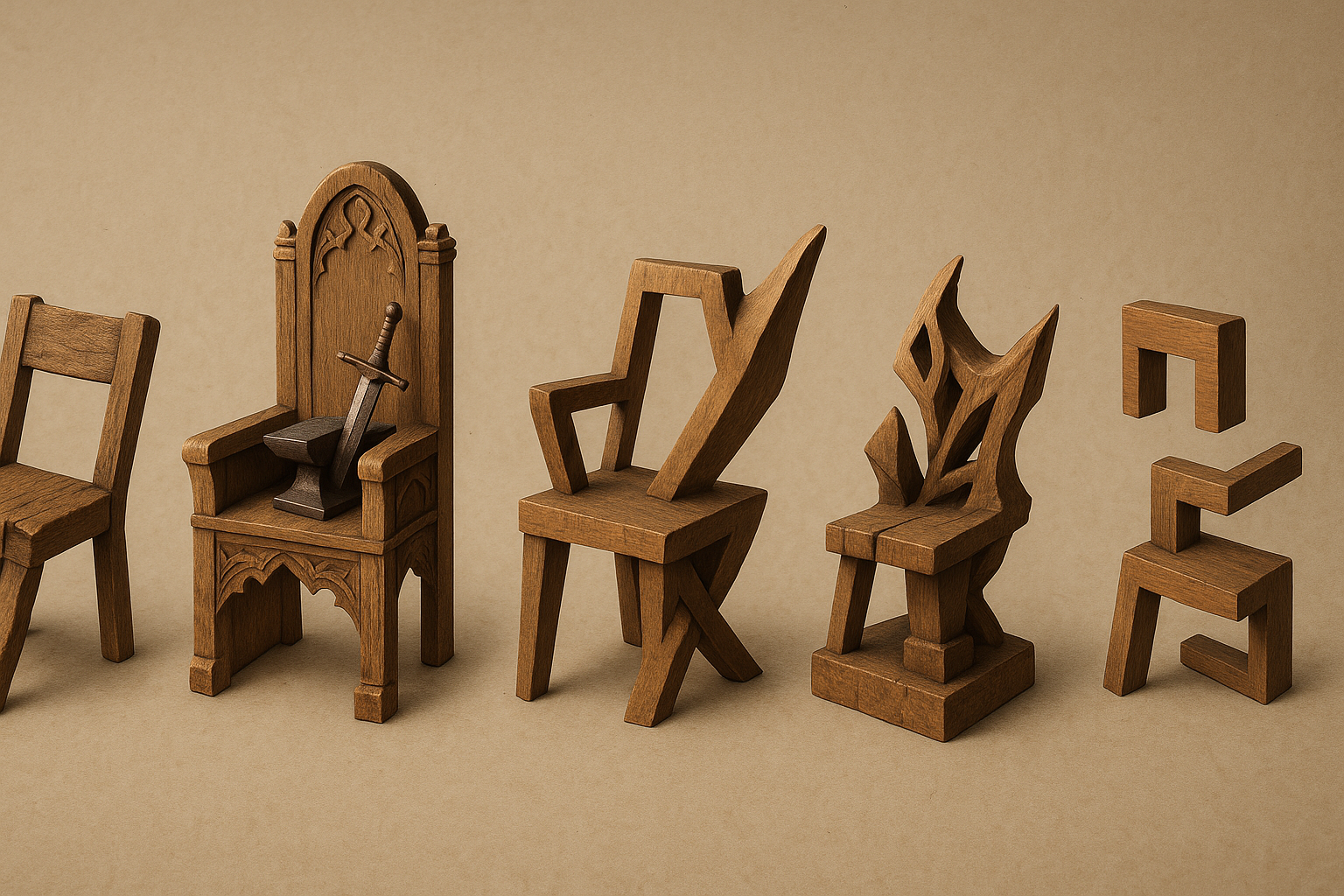
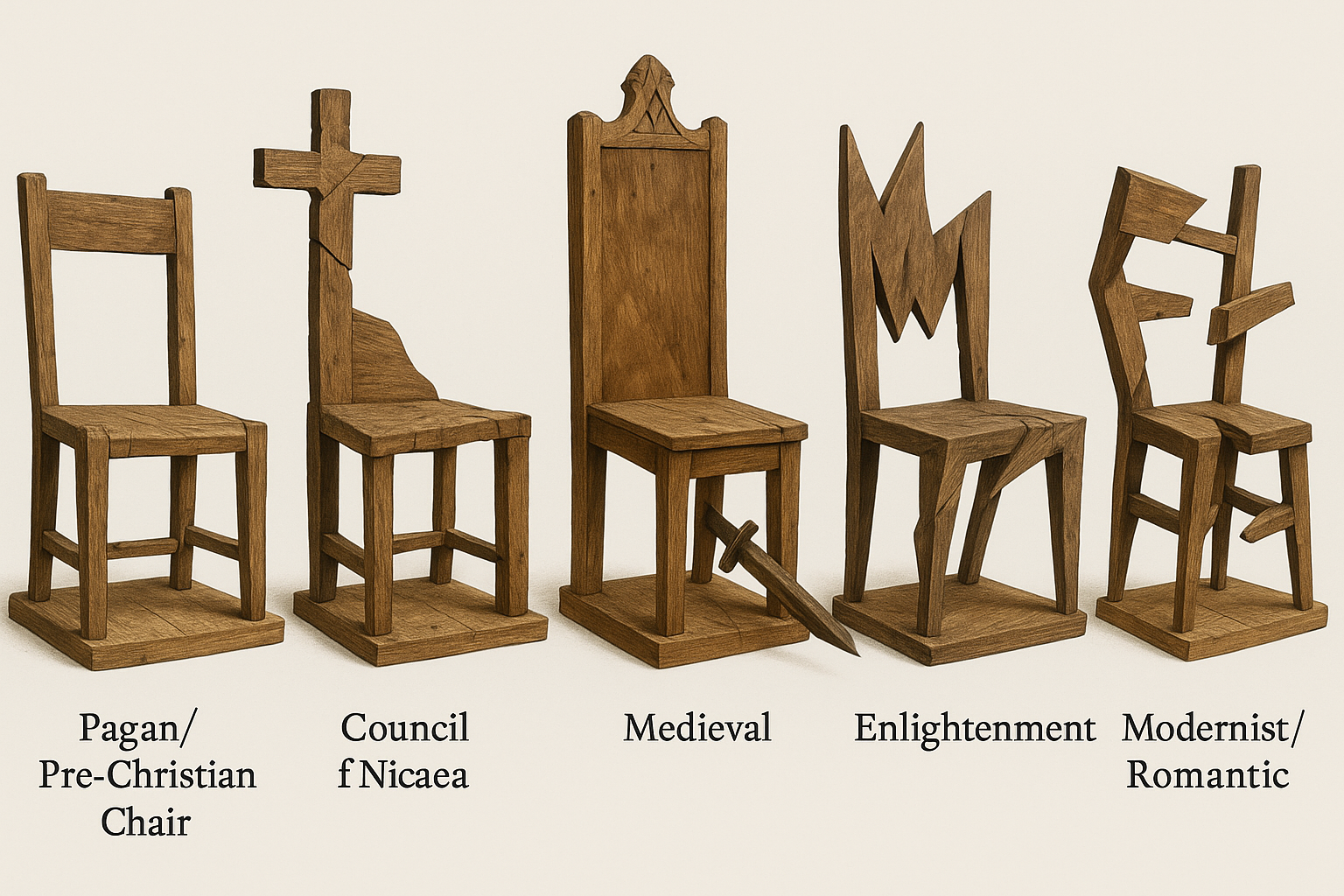
One of the opening workshops establishes Galen’s method through a single exercise. The group builds chairs slowly and reverently, treating craft as something that must be earned. When the chairs are finished, Galen asks them to take hammers to what they’ve made, then to agree on what still exists and what to call it and declare the name unchangeable.
The five students — Myles, Naomi, Jonah, Cass, and Micah—gather the wreckage and, through discussion and consent, name it The Sacred Chair.
Galen allows the act to complete itself before speaking. Then he delivers the verdict that stills the room: Congratulations, you have just created a religion. The lesson lands in the body. Once naming becomes a shared authority, people sanctify what they have destroyed with startling ease.
Myles feels shame for what they have done, for what they destroyed, for what they created, obliterated, and then called sacred. He realizes then how power lives—like a parasite—hidden inside belief.
This is where Galen’s vulnerability begins to show. His teaching works because it bypasses the protected self. It touches the raw nerve, the part people bury. That touch carries a cost. He is a truth-teller who cannot easily live inside the social mechanisms his teaching reveals. He can name the trick, demonstrate the manufacture of the sacred, expose how words lose meaning through repetition and branding. He does not carry the social armor required to survive what happens after that exposure.
Myles becomes the vehicle for this realization because Myles arrives with nothing to protect. He comes out of addiction, out of institutional failure, looking for something that holds. He stays because the wood does not lie and because Galen does not recruit him into belief.
Across the inner narrative Myles watches Galen’s body language and strain. He begins to sense that Galen’s coherence is also a kind of danger to himself, a structural mismatch with the larger world.
Galen never adjusts himself to the room. He never anticipates reaction. He remains unchanged by who is watching. The work proceeds from him without appeal or defense.
Myles senses early what this meant. Outside the workshop, outside Laurel Canyon, this way of being would not survive. Imagining Galen being exposed to the wider world produced a physical certainty. Galen would remain himself. The world would apply pressure. The outcome feels inevitable.
The outer novel later confirms what the inner novel prepares. Jim, at Northwood, gives Isabel a living witness to Galen beyond the page. Galen is brought into spaces controlled by wealthy men at the Bohemian Club under the pretense of workshops for sons and protégés. Jim describes moments where Galen reaches past wealth and status and touches something buried, to the point a man breaks down. The group’s attitude shifts in a recognizable arc: amusement, discomfort, then a quieter fear. Then Galen disappears from the invitation list the way institutions bury dangerous clarity. No denunciation. No spectacle. Just quiet removal.
Elias completes the human portrait. Galen and Elias share a childhood bond that precedes social class, craft, ideas, and teaching. The workshop grows out of Galen’s life rather than his theories. When publication fails and the manuscript is managed into silence, Galen takes it hard. The shop fades. Money tightens. He drifts to the desert. Friendship thins. The end arrives as aftermath, exile, and suicide.
The result is a character whose tragedy has nothing to do with martyrdom. He is erased because he cannot be made compatible. The grandmother’s final knowledge seals this. She loves the book and understands its cost. She lives inside the world that would grind someone like Galen down without even noticing it had done so.
But Isabel notices. She's the one member of her powerful family who dares to live with what was buried and who was lost.
The inner novel closes with Galen’s final workshop. It is the only time he speaks without tools, without demonstration, without the shelter of metaphor. He does not offer answers. He names the wound beneath belief, beneath systems, beneath fluency itself, and asks the group to sit with it long enough to remember what they are.
The effect is immediate and lasting. The five students leave changed in ways they cannot translate or perform. They are not converted. Not healed. They simply carry something forward in their bodies. For Myles especially, the moment settles as recognition: Galen is one of the few people a person meets who alters the shape of a life simply by refusing to lie. When the workshop ends, nothing feels closed. Something has been given, and it now belongs to them to keep alive.
Myles leaves Laurel Canyon with just one phrase pressing on his soul.
Please be true.
View two more workshop images